Overview
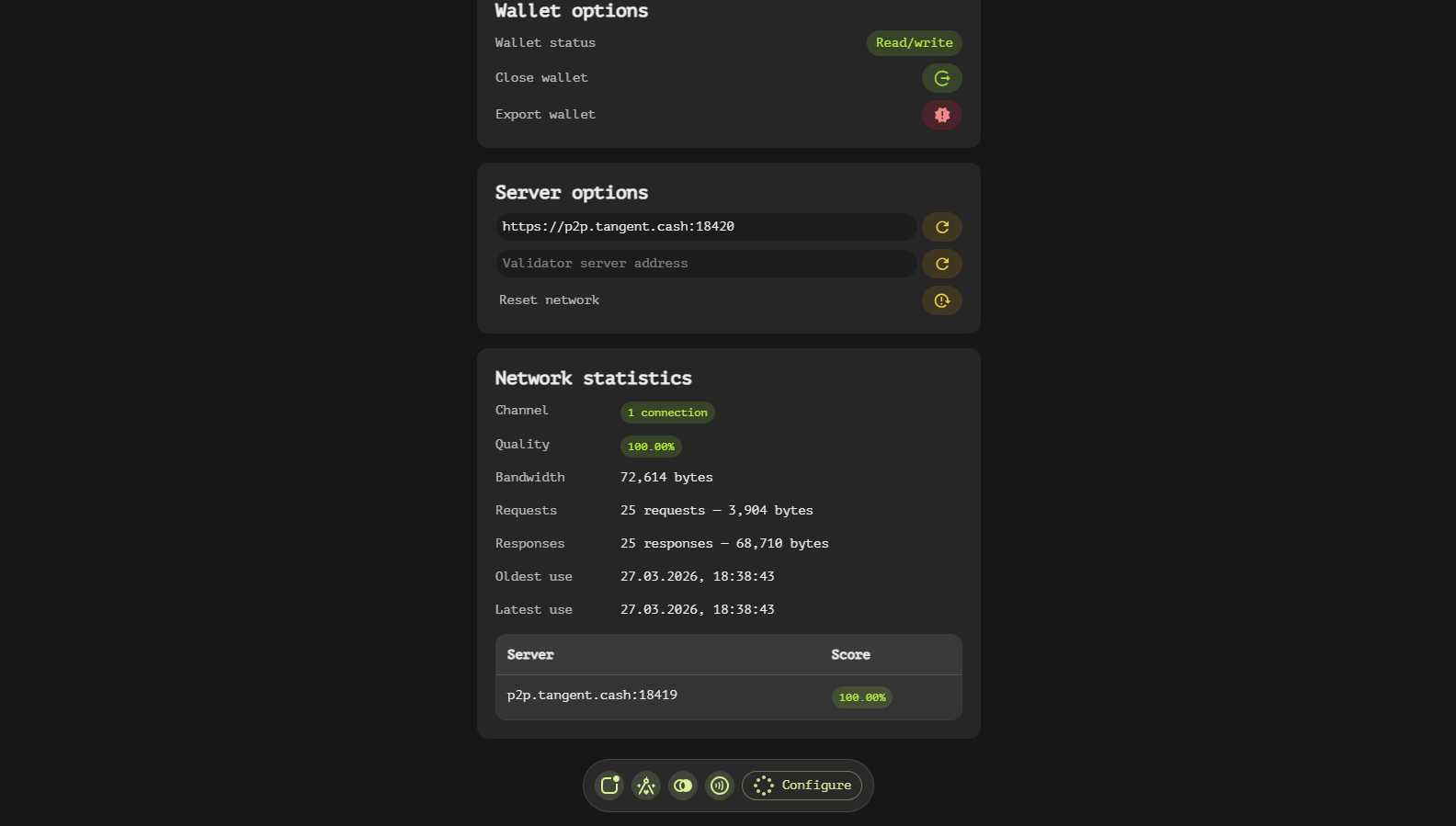
Tangent Wallet is a non-custodial application for the Tangent blockchain. It keeps your keys on your device, talks to the network through public RPC servers you can replace at any time, and bundles a block explorer, a bridge (vault) interface, a decentralized exchange front-end and a payment composer in a single app. The same interface runs as a Web app at tangent.cash and as a desktop application.
Security First
Wallet credentials are stored encrypted on the device, protected by a password. Nothing is uploaded: there are no accounts, no e-mail, no cookies and no analytics. Signing always happens locally — even when you browse the explorer or the DEX, your key is never sent anywhere. A watch-only import lets you monitor balances and history without ever touching a private key.
The Hub
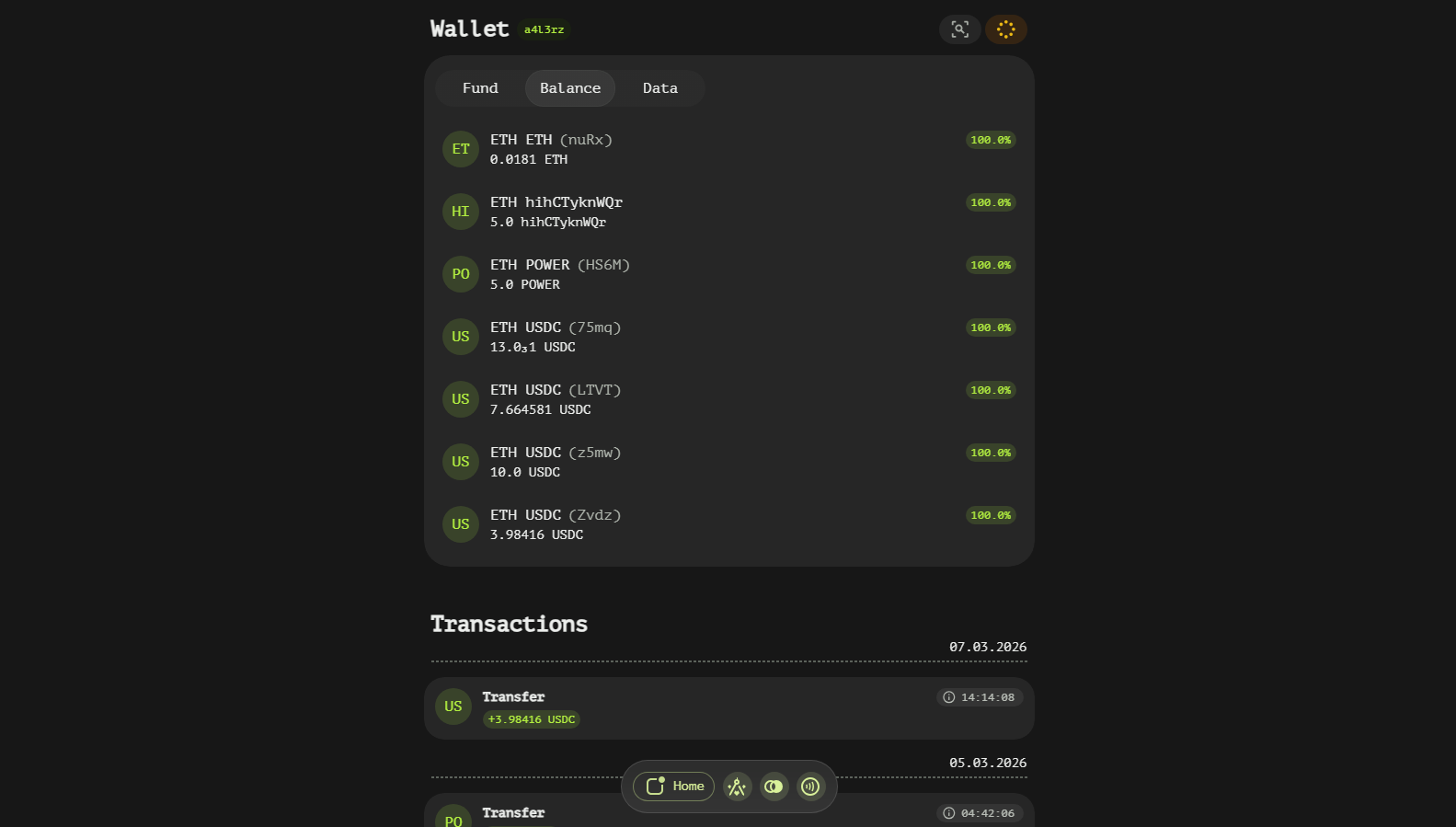
The Hub is the wallet home screen: your address, total balance in fiat, asset count and the latest block height. Below it you can switch between the Fund, Balance and Data tabs, and scroll a live list of transactions affecting the account.
Explorer
A global finder (top-right search) locates accounts, transactions and blocks by hash or address. Every block page exposes full internals — roots, proofs, slot statistics — and every transaction page breaks down gas use, calldata and emitted events. The explorer also renders vault (bridge) state per blockchain.
Payments
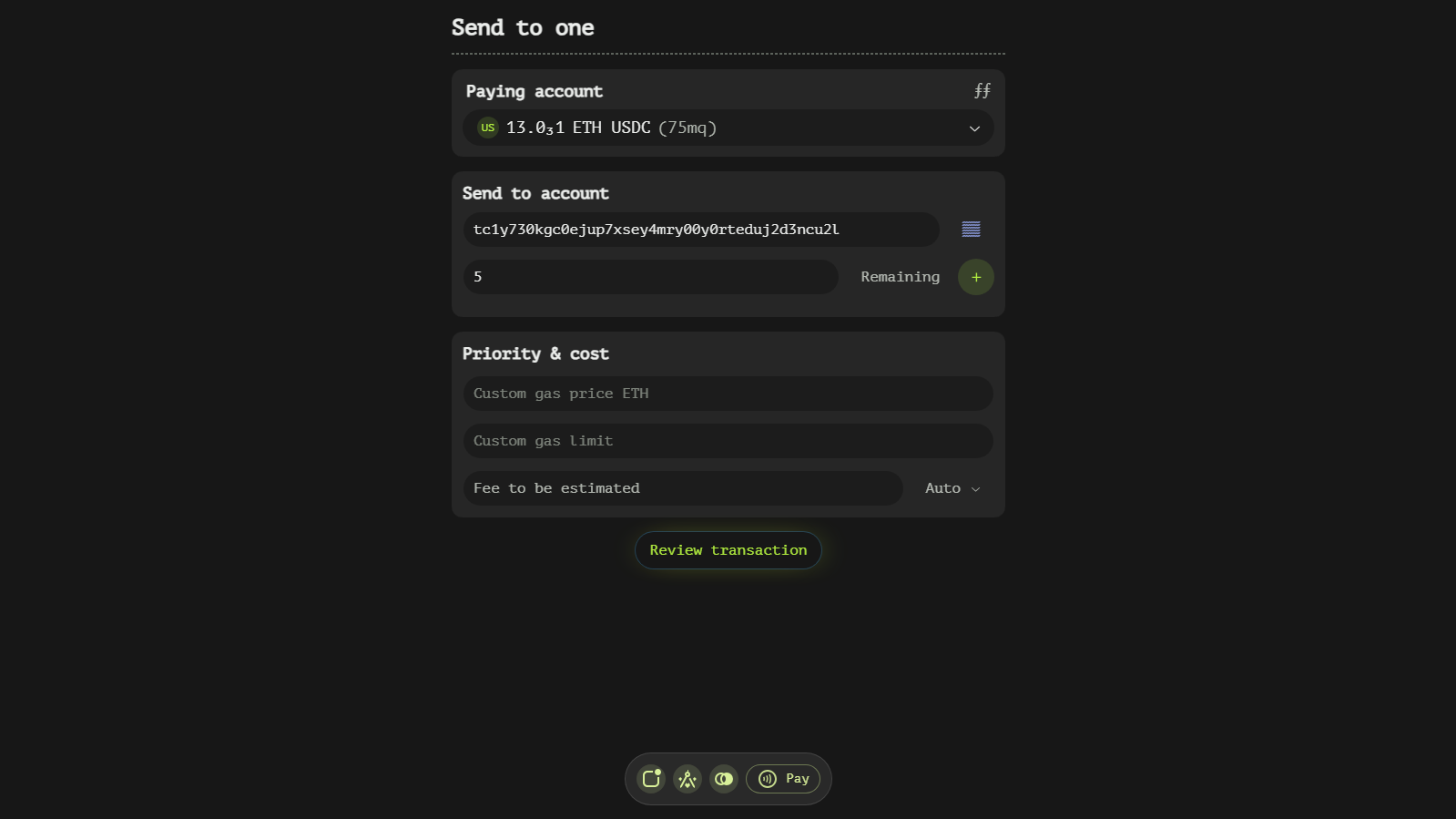
The Pay screen composes every on-chain action: token transfers, approvals of pre-built transaction files, vault claims and account setup (block production, vault participation and attestations). Fees are estimated automatically, with an advanced mode for custom nonce, gas price and gas limit.
Decentralized Exchange
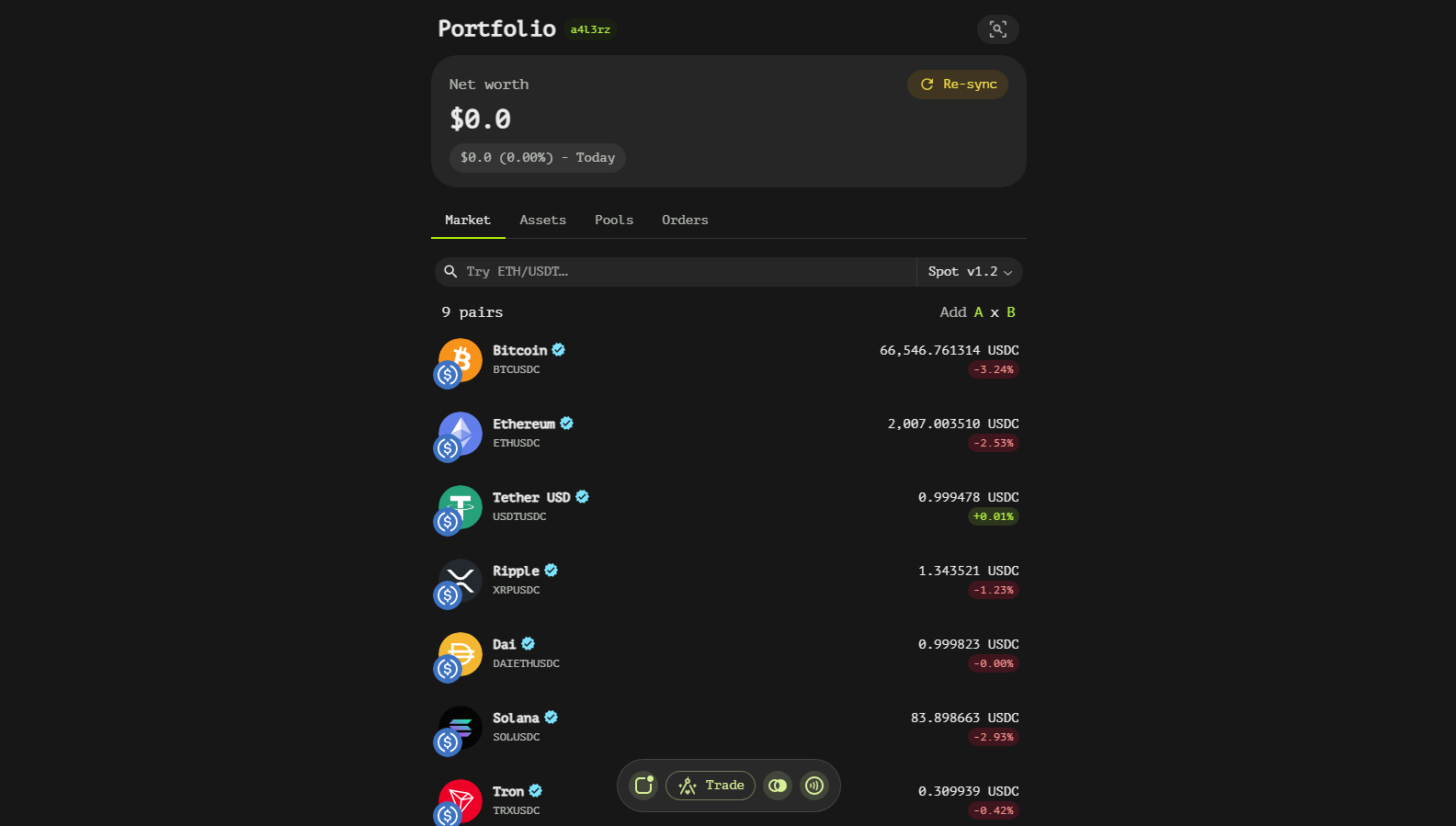
The Dex tab is a full trading terminal on top of an on-chain order book and concentrated liquidity pools: price chart, depth chart, order maker, liquidity pools and an account wallet view with open orders and positions.
Vaults (Bridges)
Assets from external blockchains (Bitcoin, Ethereum, Tron, Ripple and others) move in and out through vaults run by on-chain participant committees. The wallet shows funding addresses for deposits, vault capacity and queues, and guides withdrawals back to the destination chain.
Networks
Three networks are selectable at wallet setup: Reglocal (a local development node), Testnet (public peers with test coins) and Mainnet (live production network). The active network is always visible in the interface.